
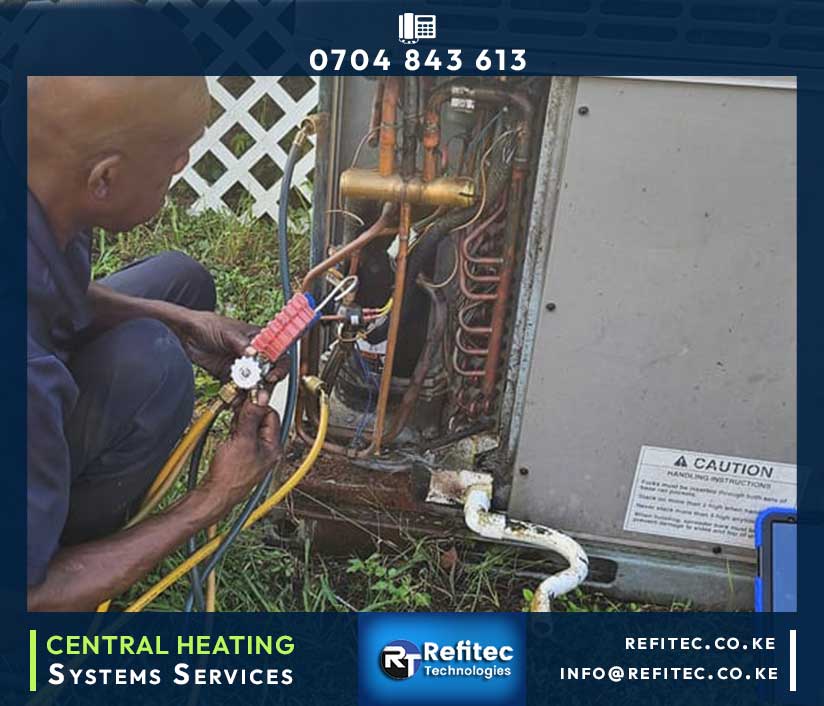
Central heating is no longer a luxury reserved for cold-climate countries. As Nairobi’s highland neighborhoods and Kenya’s cooler counties — Nakuru, Eldoret, Nyeri, Nyandarua, and the Rift Valley highlands — grow denser with residential estates and commercial developments, demand for reliable central heating services has grown steadily alongside them. Whether you are installing a new system, maintaining an existing one, or upgrading aging infrastructure, understanding what these services involve and what they cost puts you in a better position to plan and budget.
What Central Heating Services Cover
Central heating services encompass the full lifecycle of a heating system, from initial design and installation through to routine maintenance, repair, and eventual decommissioning or replacement. A properly qualified technician or heating engineer will assess your property, recommend the most appropriate system type, carry out the installation to code, and provide ongoing support to keep the system running efficiently.
The scope of central heating services typically includes the following activities.
System Design and Consultation
Before any pipework is laid or boiler mounted, a heating engineer surveys the property. They calculate the heat load — that is, how much thermal energy the building needs to stay comfortable — based on floor area, ceiling height, insulation quality, window area, and local climate. From this assessment they recommend system type, boiler capacity, radiator sizing, and pipe routing. This design phase is critical; an undersized boiler will run constantly and still fail to heat the space, while an oversized one will short-cycle, consuming more fuel and wearing out faster.
Boiler Installation and Replacement
The boiler is the heart of any central heating system. Installation involves mounting the unit, connecting it to the fuel supply (LPG, natural gas, diesel, or an electric heat pump), fitting the flue for exhaust gases, connecting the flow and return pipework, and commissioning the controls. Replacement of an old boiler follows the same process with the added step of safely decommissioning and removing the existing unit. In Kenya, LPG and diesel-fired boilers are most common in residential and light commercial settings, given the limited reach of piped natural gas outside Nairobi’s industrial areas.
Radiator and Underfloor Heating Installation
Radiators are wall-mounted heat emitters connected to the boiler via copper or CPVC pipework. Each radiator is fitted with a thermostatic radiator valve (TRV) that allows room-by-room temperature control. Underfloor heating, either wet (warm water pipes embedded in a screed) or dry (electric heating mats), is increasingly popular in new-build homes and tiled rooms such as bathrooms and kitchens. Installation requires careful planning of pipe spacing, manifold placement, and insulation beneath the floor to prevent downward heat loss.
Pipework and System Plumbing
All central heating services involve pipework — the network of flow and return pipes that carry hot water from the boiler to each radiator or underfloor loop and back again. In new builds, pipes are often embedded in walls or floors during construction. In retrofits, they may be surface-mounted in protective trunking. Pipe sizing must match the flow rates required, and the system must be correctly balanced so that each radiator receives its intended share of heat.
Controls and Thermostat Installation
Modern heating systems are fitted with programmable or smart thermostats, zone valves, and time controllers. These controls allow the occupant to set heating schedules, define temperature zones within the building, and monitor energy consumption. Installation involves wiring the controls to the boiler and zone valves, programming the schedule, and testing the full control sequence.
System Commissioning and Pressure Testing
Once installed, the system is filled with water, dosed with an inhibitor chemical to prevent corrosion and scale, pressure tested to confirm there are no leaks, and then fired up for the first time. The engineer balances the radiators, checks flue gas readings on combustion appliances, and verifies that all safety devices — pressure relief valves, overheat stats, and expansion vessels — are functioning correctly.
Annual Servicing and Maintenance
Central heating services are not a one-time event. Annual servicing is essential to maintain efficiency, extend equipment life, and ensure safety. A service visit typically covers cleaning the heat exchanger, checking combustion performance, inspecting the flue, testing safety controls, checking system pressure, bleeding air from radiators, and topping up inhibitor if needed. Systems that are not serviced regularly lose efficiency quickly and are more prone to breakdowns.
Fault Diagnosis and Repairs
Heating systems develop faults over time — circulation pumps seize, pressure vessels lose charge, zone valves stick, and pilot lights fail. Fault diagnosis requires a technician who understands both the mechanical and electrical elements of the system. Common repairs include pump replacement, expansion vessel recharging or replacement, valve replacement, radiator replacement, thermostat replacement, and boiler heat exchanger cleaning or replacement.
System Flushing and Power Flushing
Over time, heating systems accumulate sludge — a mixture of rust particles, scale, and debris — that reduces flow, causes cold spots on radiators, and damages pumps and boilers. Power flushing uses a high-flow, low-pressure machine to drive a cleaning solution through every part of the system, dislodging and removing sludge. A full power flush is often recommended before a new boiler is fitted to an old system, and periodically on systems more than ten years old.
Decommissioning and System Removal
When a property is being renovated or a heating system is being replaced entirely, the old system must be safely decommissioned. This involves draining all water from the pipework, disconnecting and capping fuel supplies, removing radiators, and where applicable, making good the walls and floors where pipes were routed.
Estimated Cost of Central Heating Services in Nairobi and Kenya
Costs vary depending on system size, complexity, property type, and the location within Kenya. The figures below are estimates for typical residential and light commercial work as of 2025.
| Service | Estimated Cost (KES) |
|---|---|
| System design and heat load survey | 5,000 – 15,000 |
| Boiler installation (LPG or diesel, residential) | 45,000 – 120,000 |
| Boiler replacement (supply and fit) | 60,000 – 150,000 |
| Single radiator installation | 4,000 – 9,000 |
| Full radiator installation (3-bedroom home) | 50,000 – 110,000 |
| Underfloor heating installation per square metre | 2,500 – 5,500 |
| Pipework installation per linear metre | 800 – 2,000 |
| Smart thermostat and controls installation | 8,000 – 25,000 |
| Annual boiler service | 5,000 – 12,000 |
| System power flush (residential) | 15,000 – 35,000 |
| Circulation pump replacement | 8,000 – 20,000 |
| Expansion vessel replacement | 6,000 – 16,000 |
| Zone valve replacement | 4,000 – 10,000 |
| Full system commissioning | 8,000 – 20,000 |
| System decommissioning and removal | 15,000 – 40,000 |
Prices in Nairobi’s Karen, Runda, Muthaiga, and Gigiri neighborhoods — where most demand for central heating services is concentrated — tend to sit at the upper end of these ranges due to higher labor costs and longer travel times for specialist engineers.
Estimated Prices of Central Heating Supplies in Kenya
The cost of materials is a significant part of any central heating project. Prices below reflect typical retail and wholesale market rates in Nairobi as of 2025, and will vary with supplier, brand, and import fluctuations.
| Supply Item | Estimated Price (KES) |
|---|---|
| Wall-mounted LPG boiler (15–24 kW) | 55,000 – 130,000 |
| Diesel-fired boiler (residential, 20–30 kW) | 80,000 – 180,000 |
| Electric heat pump (air-source, residential) | 150,000 – 350,000 |
| Steel panel radiator (single, 600mm x 800mm) | 4,500 – 9,000 |
| Thermostatic radiator valve (TRV) | 800 – 2,500 |
| Copper pipe per metre (15mm) | 350 – 600 |
| Copper pipe per metre (22mm) | 550 – 950 |
| CPVC pipe per metre (22mm) | 180 – 380 |
| Circulation pump (domestic) | 9,000 – 22,000 |
| Expansion vessel (8 litre) | 4,500 – 9,500 |
| Pressure relief valve | 1,200 – 3,500 |
| Zone valve (motorised, 22mm) | 3,500 – 8,000 |
| Programmable room thermostat | 3,500 – 8,000 |
| Smart thermostat (Wi-Fi enabled) | 12,000 – 30,000 |
| System inhibitor (1 litre) | 900 – 2,200 |
| Underfloor heating pipe per metre (16mm PEX) | 120 – 280 |
| Manifold set (6-port, underfloor) | 18,000 – 45,000 |
| Flue kit (standard concentric, LPG boiler) | 6,000 – 15,000 |
| Pipe insulation per metre | 80 – 200 |
Choosing the Right Central Heating System for Kenya
The choice of system depends primarily on fuel availability, budget, and the size of the property. LPG remains the most practical fuel in urban and peri-urban areas where piped gas is unavailable. Diesel is common in larger commercial and institutional installations. Air-source heat pumps are gaining traction where electricity supply is reliable, particularly because Kenya’s predominantly renewable electricity grid makes them a genuinely low-carbon option.
Underfloor heating suits new-build properties and major renovations where the floor can be opened up. Radiator systems are easier and less disruptive to retrofit into existing homes.
Whatever system you choose, the long-term performance of central heating services depends above all on the quality of installation and the regularity of maintenance. A well-installed and annually serviced system will run efficiently for fifteen to twenty years; a poorly installed one may fail within two or three. Always engage a qualified and experienced heating engineer, ask for a written quotation that separates labor and materials, and ensure commissioning records are provided at handover.